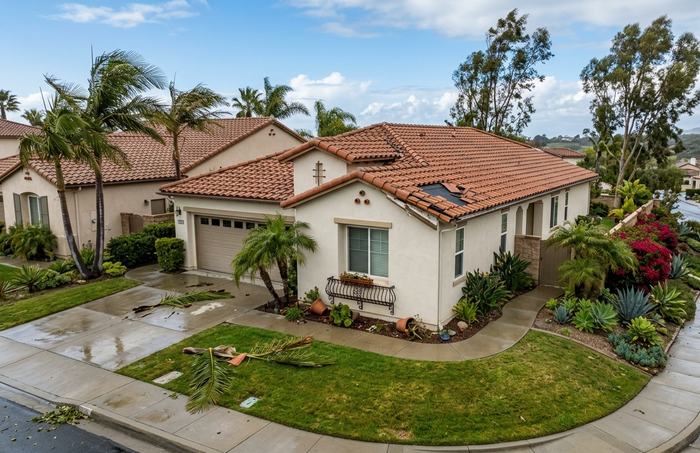
Disasters create urgency, and urgency is exactly what contractor fraud depends on. Research on disaster recovery consistently finds that more than a third of people affected by a major storm or wildfire report experiencing some kind of fraud afterward, with roughly 8 percent reporting contractor fraud specifically and another 10 percent reporting fraud from other disaster-recovery vendors. San Diego County isn't immune to either risk: wildfire season and periodic severe storm events both create the same conditions that fraudulent contractors look for elsewhere in California.
How These Scams Actually Work
The pattern is consistent enough that it has a name in the industry: "storm chasing." Contractors, sometimes legitimate businesses temporarily crossing ethical lines, sometimes people with no real construction background at all, move into a recently affected area and go door to door offering immediate repairs. The pitch relies on speed and pressure: a "free inspection" today, a contract to sign on the spot, and a warning that prices or contractor availability will only get worse if you wait.
Warning Signs Specific to Storm and Fire Situations
- Unsolicited door-to-door offers. Legitimate roofing and remodeling companies generally don't go door to door immediately after a storm or fire. A contractor who shows up unprompted, especially within days of an event, warrants extra scrutiny.
- Demands for full payment upfront. The deposit a contractor can request on a standard home improvement contract is commonly cited as capped at $1,000 or 10 percent of the contract price, whichever is less. A demand for the full amount before work starts is well outside normal practice.
- Pressure around your insurance claim. Be cautious of any contractor who offers to "waive your deductible" or asks you to sign an Assignment of Benefits (AOB) form, which can transfer control of your insurance claim, including negotiating and settling it, directly to the contractor rather than you.
- No permanent local address or verifiable license. A truck, a phone number, and a rush job with no fixed business address make it much harder to find the contractor again if something goes wrong.
- Inflated or manufactured damage claims. Investigators have documented cases of contractors exaggerating storm damage, or in rare cases causing additional damage during an "inspection," specifically to make an insurance claim larger. This is both fraud and, when damage is manufactured, criminal.
The "Cooling-Off" Period
Federal consumer protection rules generally give you a window, commonly cited as three business days, to cancel a contract signed at your home, sometimes called the "cooling-off rule." If you sign something in the pressure of the moment and have second thoughts, check the cancellation procedure the contractor is required to give you in writing at signing, and confirm the current timeline directly if you're unsure.
Verify Before You Sign, Not After
Every California contractor license can be checked directly and for free at cslb.ca.gov before you agree to anything. The lookup shows whether the license is active, what type of work it covers, and whether there's a history of disciplinary action. This single step, done before signing anything, closes off the majority of storm and fire-related scams, since most rely specifically on the homeowner not checking.
Where to Get Help
The CSLB operates a dedicated Disaster Hotline (1-800-962-1125, weekdays 8 a.m. to 5 p.m.) specifically for storm and wildfire-related hiring questions and complaints. It's a useful resource both before hiring, if you want a second opinion on a contractor, and after, if you believe you've already been targeted.
Frequently Asked Questions
Is storm and wildfire contractor fraud actually common?
Yes. Research on disaster recovery has found that more than a third of people affected by a major disaster report some form of fraud afterward, with roughly 8 percent reporting contractor fraud specifically.
What is an Assignment of Benefits form, and why is it risky?
It's a document that transfers your right to negotiate and settle your insurance claim to the contractor instead of you. Once signed, the contractor can deal directly with your insurer on terms you may not control, which is a meaningful loss of leverage over your own claim.
Should I ever hire a contractor who shows up unsolicited after a storm?
It's worth being cautious rather than ruling it out entirely. Verify their license through the CSLB before agreeing to anything, ask for references, and resist any pressure to sign the same day.
Has this actually happened in California recently?
Yes. In 2026, six unlicensed contractors were criminally charged for operating in the Palisades Fire disaster zone in Los Angeles County, collectively bidding over $1.2 million in work without a valid license. It's a documented, recent example of the exact pattern described here.
How much of a deposit is normal for a contractor to ask for in California?
It's commonly cited as $1,000 or 10 percent of the total contract price, whichever is less, for most home improvement contracts. A request for significantly more upfront is worth a direct conversation, and worth confirming the current rule with CSLB, before you agree.
Can I cancel a contract if I signed it under pressure?
If you signed at your home, federal law generally gives you three business days to cancel in writing with no penalty. Follow the cancellation instructions the contractor was required to provide in writing at signing.
Who do I contact if I think I've been targeted by a fraudulent contractor?
The CSLB Disaster Hotline (1-800-962-1125) handles exactly this kind of situation, both for verifying a contractor before hiring and for filing a complaint after the fact.